
 BELIGAS PHARMA
Blog
Signs of Low Testosterone in Men: Symptoms, Causes, Diagnosis & Natural Support Guide (2026)
Jun
Testosterone is one of the most important hormones in the male body. It plays a critical role in muscle development, strength, energy levels, mood, bone density, libido, and overall well-being. While testosterone levels naturally fluctuate throughout life, some men experience a noticeable decline that can affect their daily performance, recovery, and quality of life Best Legal Bodybuilding Supplements.
In recent years, awareness of testosterone health has increased significantly. More men are paying attention to symptoms such as fatigue, reduced motivation, loss of muscle mass, poor recovery, decreased athletic performance, and changes in body composition. These symptoms are often associated with aging, stress, poor sleep, or lifestyle factors, but in some cases they may be linked to lower-than-normal testosterone levels.
Understanding the signs of low testosterone in men is important because many symptoms can develop gradually. Men often adapt to these changes over time and may not immediately recognize that something has changed. Early awareness can help individuals make informed decisions about their health, lifestyle, nutrition, and long-term wellness goals.
This comprehensive guide explains the most common symptoms, possible causes, risk factors, diagnostic methods, and evidence-based strategies that may support healthy testosterone levels.
What Is Testosterone?
Testosterone is the primary male sex hormone responsible for many physical and biological functions.
It contributes to:
- Muscle growth and maintenance
- Strength and athletic performance
- Bone density
- Red blood cell production
- Sexual health
- Mood regulation
- Energy levels
- Recovery capacity
- Body composition
Although testosterone is often associated with muscle building, its influence extends far beyond physical appearance. Healthy testosterone levels help support numerous systems throughout the body.
Testosterone production primarily occurs in the testes and is regulated through a complex communication system involving the brain and endocrine system.
Levels naturally rise during puberty and early adulthood before gradually declining with age.
Why Testosterone Matters for Overall Health
Many people think testosterone only affects muscle size or physical performance. In reality, testosterone influences many aspects of daily life.
Healthy testosterone levels may support:
Physical Performance
Men with healthy hormone levels often experience better training performance, improved recovery, and greater strength potential.
Energy Production
Testosterone is closely connected to energy regulation. Low levels may contribute to fatigue and reduced stamina.
Mental Well-Being
Hormonal balance can influence motivation, confidence, mood, and mental focus.
Body Composition
Testosterone helps support lean muscle mass while also influencing fat distribution.
Recovery and Adaptation
Athletes and active individuals often rely on proper hormonal function to support recovery after training.
Common Signs of Low Testosterone in Men
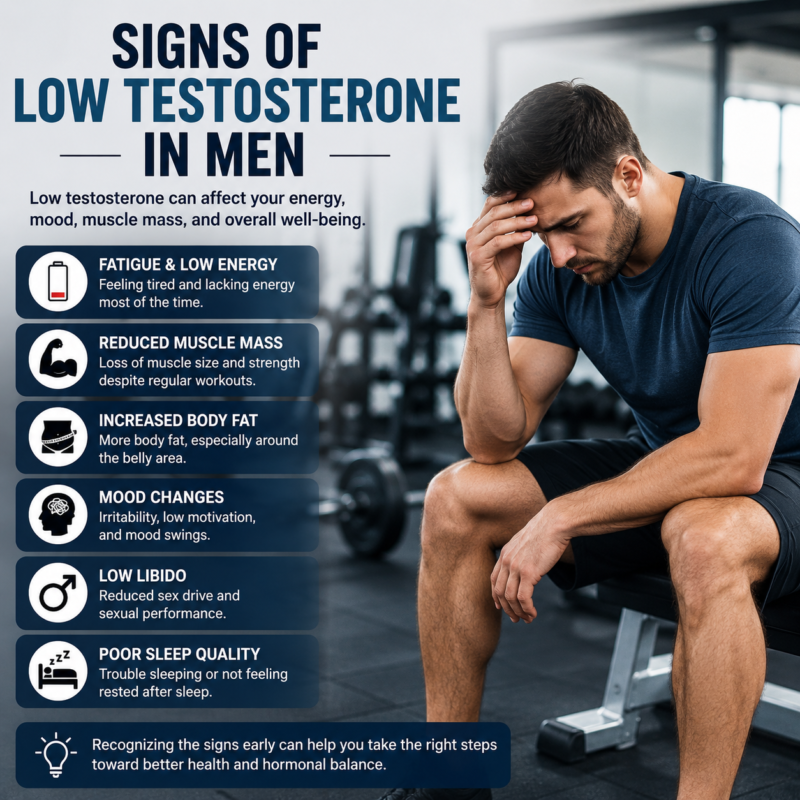
Low testosterone symptoms vary from person to person. Some men experience only a few symptoms, while others notice several changes occurring simultaneously.
The following are among the most commonly reported signs.
1. Persistent Fatigue and Low Energy
One of the earliest and most frequently reported symptoms is ongoing fatigue.
This type of fatigue often differs from normal tiredness because:
- It persists despite adequate sleep
- Energy remains low throughout the day
- Motivation decreases
- Physical tasks feel more demanding
Many men initially assume that work stress or aging is responsible for their fatigue. However, hormone levels can also play a role.
Signs Associated With Low Energy
- Reduced stamina
- Difficulty completing workouts
- Feeling drained after routine activities
- Increased need for naps
- Slower recovery from exertion
Persistent fatigue should never be ignored, particularly when accompanied by other symptoms.
2. Reduced Muscle Mass
Testosterone plays a major role in maintaining lean muscle tissue.
When testosterone levels decline, some men notice:
- Decreased muscle size
- Reduced training performance
- Slower muscle recovery
- Difficulty maintaining strength
Muscle loss may occur gradually, making it difficult to detect initially.
Even men who continue training regularly may notice changes in their ability to gain or Best Bulking Stack for Mass Gain.
Common Observations
- Smaller arm or leg measurements
- Reduced workout performance
- Less muscular appearance
- Difficulty progressing in training
Muscle loss alone does not confirm low testosterone, but it is a common symptom.
3. Increased Body Fat
Changes in body composition often accompany hormonal changes.
Men experiencing lower testosterone levels may notice:
- Increased abdominal fat
- Greater difficulty losing weight
- Reduced muscle definition
- Changes in overall body composition
This occurs because testosterone influences metabolism, muscle maintenance, and fat distribution.
Over time, these changes may become more noticeable even when diet and exercise habits remain relatively consistent.
4. Reduced Strength and Performance
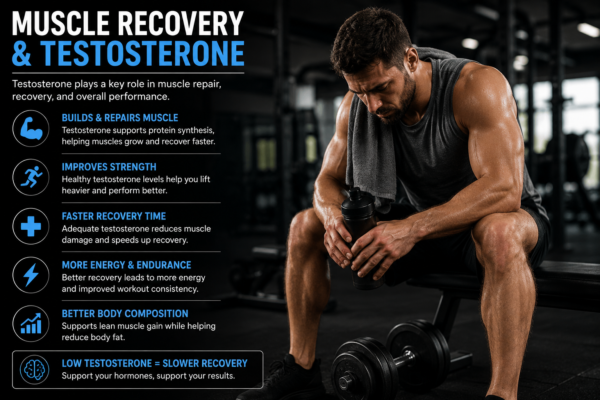
Athletes and fitness enthusiasts often notice performance-related symptoms before other signs become obvious.
Potential indicators include:
- Reduced strength
- Poor workout performance
- Slower recovery
- Lower endurance
- Reduced training motivation
Many factors can affect performance, but hormonal health is an important consideration.
Training-Related Warning Signs
- Failure to progress despite consistent training
- Longer recovery periods
- Increased fatigue during exercise
- Reduced exercise intensity
5. Lower Motivation and Drive
Testosterone influences more than physical performance.
Many men report changes in:
- Motivation
- Ambition
- Confidence
- Competitive drive
- Productivity
These changes may develop slowly and are often mistaken for stress, burnout, or lifestyle factors.
Some men describe feeling less enthusiastic about activities they previously enjoyed.
6. Mood Changes
Hormones can influence emotional well-being.
Men with low testosterone sometimes report:
- Irritability
- Mood swings
- Frustration
- Reduced optimism
- Emotional sensitivity
While mood changes can have many causes, hormonal balance remains an important factor.
Mental health should always be evaluated comprehensively rather than attributing symptoms to a single cause.
7. Difficulty Concentrating
Many men report cognitive symptoms when experiencing hormonal changes.
These may include:
- Reduced focus
- Mental fatigue
- Poor concentration
- Memory difficulties
- Brain fog
These symptoms can affect:
- Work performance
- Study habits
- Decision-making
- Daily productivity
Because cognitive symptoms overlap with stress and sleep deprivation, they are often overlooked.
8. Changes in Recovery Capacity
Best Supplements for Muscle Recovery is essential for performance and long-term health.
Some men experiencing lower testosterone levels notice:
- Slower recovery after workouts
- Increased soreness
- Reduced training frequency
- Greater fatigue after exercise
Athletes often recognize recovery changes before other symptoms become obvious.
A decline in recovery capacity may indicate that multiple factors, including hormonal health, should be evaluated.
What Causes Low Testosterone?
Low testosterone can result from a variety of factors. In many cases, several factors contribute simultaneously.
Understanding these causes can help men identify potential areas for improvement.
Aging
Age-related testosterone decline is one of the most common contributors.
While the rate varies between individuals, testosterone production often decreases gradually over time.
However, aging alone does not automatically result in clinically low testosterone levels.
Lifestyle, nutrition, sleep quality, activity levels, and overall health also play important roles.
Chronic Stress
Long-term stress may influence hormonal balance.
When stress remains elevated for extended periods, the body increases production of stress hormones such as cortisol.
Excessive stress can negatively affect recovery, sleep quality, motivation, and overall well-being.
Poor Sleep Quality
Sleep is one of the most important factors affecting testosterone production.
Research consistently shows that inadequate sleep can negatively impact hormone regulation.
Men who regularly experience poor sleep may notice:
- Lower energy
- Reduced recovery
- Increased fatigue
- Reduced training performance
The relationship between sleep and testosterone will be explored in greater detail in the next section.
Sleep and Testosterone Production
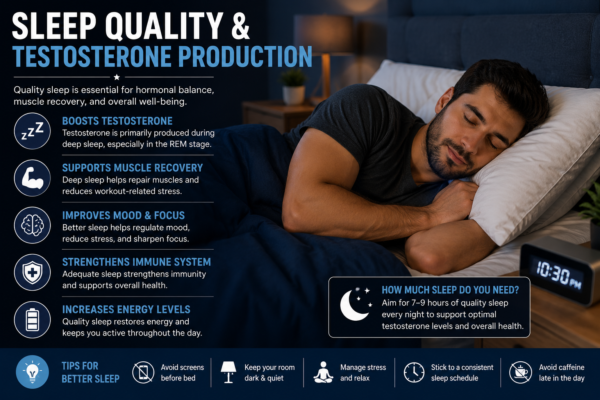
Sleep is one of the most important yet often overlooked factors affecting hormone health.
A significant portion of testosterone production occurs during sleep. When sleep quality declines, testosterone production may also be negatively affected.
Modern lifestyles frequently contribute to poor sleep habits through:
- Excessive screen time
- Shift work
- High stress levels
- Inconsistent sleep schedules
- Poor sleep environments
Men who consistently sleep fewer hours than recommended often report symptoms similar to those associated with low testosterone.
Signs That Sleep May Be Affecting Hormonal Health
- Waking up tired despite spending enough time in bed
- Difficulty recovering from workouts
- Reduced energy levels throughout the day
- Increased cravings for unhealthy foods
- Reduced motivation and productivity
Improving sleep quality is often one of the first lifestyle strategies recommended for overall hormonal support.
Healthy Sleep Habits
To support better sleep quality:
- Maintain a consistent sleep schedule
- Limit screen exposure before bedtime
- Keep the bedroom cool and dark
- Reduce caffeine consumption later in the day
- Establish a relaxing evening routine
Small improvements in sleep quality can produce meaningful benefits over time.
Excess Body Fat and Hormonal Health
Body composition and hormone health are closely connected.
Excess body fat may contribute to hormonal changes through several mechanisms.
Research suggests that maintaining a healthy body composition may support overall endocrine function.
Common Challenges
Men carrying excess body fat often report:
- Reduced energy
- Lower physical performance
- Increased fatigue
- Greater difficulty recovering from exercise
This relationship is complex and influenced by multiple factors including diet, activity level, sleep, stress, and genetics.
Practical Strategies
Improving body composition may involve:
- Resistance training
- Cardiovascular exercise
- Balanced nutrition
- Improved sleep habits
- Stress management
Long-term consistency is often more effective than short-term extreme approaches.
Lack of Physical Activity
Regular physical activity supports numerous aspects of health.
A sedentary lifestyle may contribute to:
- Reduced muscle mass
- Increased body fat
- Lower energy levels
- Reduced overall fitness
Exercise provides benefits beyond physical appearance.
Many men report improvements in:
- Mood
- Motivation
- Confidence
- Energy
- Recovery
after adopting a consistent training routine.
Recommended Activities
- Resistance training
- Walking
- Cycling
- Swimming
- Recreational sports
The goal should be sustainability rather than perfection.
Nutritional Factors
Nutrition influences nearly every system in the body.
Poor dietary habits may negatively affect:
- Energy levels
- Recovery
- Body composition
- Athletic performance
- Hormonal balance
Nutrients Associated With Hormonal Health
A balanced diet should include:
- High-quality protein
- Healthy fats
- Complex carbohydrates
- Vitamins and minerals
- Adequate hydration
Common Dietary Mistakes
- Excessive calorie restriction
- Inadequate protein intake
- Excessive processed food consumption
- Poor meal consistency
Nutrition should support overall health rather than focusing on quick fixes.
Medical Conditions That May Affect Testosterone
Various health conditions may influence hormone production and regulation.
Potential factors include:
- Metabolic disorders
- Endocrine disorders
- Certain chronic illnesses
- Sleep disorders
- Obesity-related complications
Because symptoms overlap with many other health concerns, professional evaluation is often necessary when symptoms persist.
How Low Testosterone Is Diagnosed
Many symptoms associated with low testosterone can also result from stress, poor sleep, inadequate nutrition, overtraining, or other medical conditions.
For this reason, diagnosis involves more than simply recognizing symptoms.
Medical History Review
Healthcare professionals often begin by discussing:
- Symptoms
- Lifestyle habits
- Sleep quality
- Exercise patterns
- Medical history
- Current medications
This information helps establish a complete picture of overall health.
Physical Assessment
A physical evaluation may provide additional information regarding:
- Body composition
- Muscle mass
- General health indicators
- Potential contributing factors
No single observation determines testosterone status.
Instead, multiple factors are evaluated together.
Laboratory Testing
Blood testing is commonly used to evaluate hormone levels.
Testing may include measurements related to:
- Total testosterone
- Free testosterone
- Other hormone markers
Because hormone levels naturally fluctuate, healthcare providers may recommend additional testing when necessary.
Testosterone Levels by Age
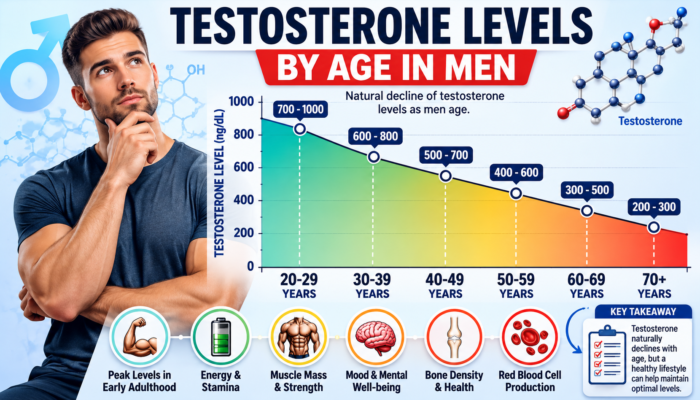
Testosterone levels naturally change throughout life.
Teenage Years
During adolescence, testosterone production increases dramatically as puberty progresses.
This period is associated with:
- Rapid growth
- Increased muscle development
- Voice changes
- Physical maturation
Early Adulthood
Many men reach their highest testosterone levels during early adulthood.
This period often corresponds with:
- Peak physical performance
- Strong recovery capacity
- Greater strength potential
Middle Age
Gradual changes may occur over time.
Some men maintain healthy hormone levels well into later life, while others experience more noticeable declines.
Older Adulthood
Hormonal changes become increasingly common with age.
However, chronological age alone does not determine hormonal health.
Lifestyle choices continue to play a major role.
Natural Ways to Support Healthy Testosterone Levels

Many men search for strategies that may help support hormonal health naturally.
Although results vary from person to person, several evidence-based habits are consistently associated with better overall wellness.
Prioritize Quality Sleep
Sleep remains one of the most powerful lifestyle factors.
Aim for:
- Consistent sleep schedules
- Sufficient sleep duration
- High-quality sleep environments
Better sleep often supports:
- Recovery
- Energy
- Cognitive performance
- Overall well-being
Maintain a Healthy Body Composition
Excess body fat may negatively influence multiple aspects of health.
Strategies include:
- Resistance training
- Regular physical activity
- Balanced nutrition
- Consistent lifestyle habits
Long-term improvements often produce better results than rapid weight-loss approaches.
Follow a Structured Resistance Training Program
Resistance training remains one of the most effective tools for supporting physical performance.
Potential benefits include:
- Improved strength
- Increased muscle mass
- Better body composition
- Enhanced confidence
Consistency is more important than training intensity alone.
Manage Stress Effectively
Chronic stress may negatively impact multiple systems within the body.
Helpful stress-management strategies include:
- Walking
- Meditation
- Deep breathing
- Recreational activities
- Time management
Reducing unnecessary stress may support overall health and recovery.
Consume Adequate Protein
Protein plays an important role in:
- Muscle maintenance
- Recovery
- Physical performance
A balanced nutritional approach should include sufficient protein intake from quality sources.
Stay Physically Active
Daily movement contributes to:
- Cardiovascular health
- Energy levels
- Recovery
- Physical fitness
Even simple habits such as regular walking can provide meaningful benefits.
When Should You Seek Professional Evaluation?
Many symptoms associated with low testosterone overlap with other health concerns.
Professional evaluation may be appropriate when symptoms:
- Persist for extended periods
- Interfere with daily life
- Affect physical performance
- Reduce quality of life
Seeking guidance can help identify the underlying cause and determine appropriate next steps.
The Importance of Looking Beyond Testosterone
It is important to remember that not every symptom automatically indicates low testosterone.
Factors such as:
- Sleep deprivation
- Stress
- Poor nutrition
- Inadequate recovery
- Sedentary behavior
can produce similar symptoms.
For this reason, overall lifestyle evaluation is often just as important as hormone testing.
Building a Long-Term Health Strategy
Many men focus exclusively on finding a quick solution.
However, long-term health typically depends on consistent habits.
Successful strategies often include:
- Regular exercise
- Quality sleep
- Balanced nutrition
- Stress management
- Routine health monitoring
These habits support not only hormonal health but overall physical and mental well-being.
Frequently Asked Questions
What are the most common signs of low testosterone in men?
The most commonly reported signs of low testosterone in men include persistent fatigue, reduced muscle mass, increased body fat, lower motivation, reduced strength, slower recovery, mood changes, and difficulty concentrating.
Because these symptoms can also result from stress, poor sleep, or other health conditions, proper evaluation is important.
Can low testosterone affect muscle growth?
Testosterone plays an important role in maintaining muscle mass and supporting recovery.
Men experiencing lower testosterone levels may notice:
- Slower muscle growth
- Reduced strength gains
- Difficulty maintaining muscle mass
- Longer recovery periods
However, training quality, nutrition, sleep, and overall health also contribute significantly to physical performance.
Does age automatically cause low testosterone?
No.
Although testosterone levels tend to decline gradually with age, many men maintain healthy hormone levels throughout adulthood.
Factors such as:
- Physical activity
- Nutrition
- Sleep quality
- Stress management
- Overall health
often influence hormonal health as much as age itself.
Can poor sleep lower testosterone levels?
Sleep is one of the most important factors involved in hormone regulation.
Men who consistently experience inadequate or poor-quality sleep often report:
- Reduced energy
- Poor recovery
- Lower motivation
- Decreased physical performance
Improving sleep habits may support overall wellness and hormone health.
Can exercise help support healthy testosterone levels?
Regular exercise is associated with numerous health benefits.
Resistance training and general physical activity may help support:
- Muscle maintenance
- Body composition
- Recovery
- Energy levels
- Overall fitness
Consistency is generally more important than extreme training methods.
How is low testosterone diagnosed?
Diagnosis typically involves:
- Symptom evaluation
- Medical history review
- Physical assessment
- Laboratory testing
A healthcare professional can determine whether hormone levels fall within an appropriate range and whether additional investigation is necessary.
Can stress affect testosterone?
Chronic stress may influence multiple aspects of health.
Long-term stress often affects:
- Sleep quality
- Recovery
- Energy levels
- Motivation
Managing stress effectively may contribute to overall well-being and hormonal balance.
Can nutrition influence testosterone levels?
Nutrition supports many systems throughout the body. Best Foods Before and After Workout
A balanced diet containing:
- Protein
- Healthy fats
- Vitamins
- Minerals
- Adequate calories
helps support overall health and physical performance
Final Thoughts
Understanding the signs of low testosterone in men can help individuals become more aware of factors that influence their overall health, physical performance, recovery, and Beginner Bodybuilding Supplement Stack
Symptoms such as persistent fatigue, reduced strength, increased body fat, slower recovery, lower motivation, and changes in mood can sometimes be associated with hormonal changes. However, these symptoms can also result from poor sleep, chronic stress, inadequate nutrition, insufficient physical activity, or other health concerns.
For this reason, it is important to evaluate the complete picture rather than focusing on a single symptom.
The good news is that many lifestyle habits associated with healthy testosterone levels also support better overall health. Prioritizing sleep, maintaining a healthy body composition, following a structured training program, managing stress effectively, and consuming a balanced diet may all contribute to improved well-being.
Whether your goal is better performance in the gym, improved recovery, increased energy, or long-term health, understanding testosterone and its role within the body can help you make more informed decisions.
A proactive approach to sleep, nutrition, exercise, and recovery often provides benefits that extend far beyond hormone health alone. Consistency, patience, and evidence-based habits remain the foundation of long-term success.
References
Mayo Clinic – Understanding Testosterone Deficiency
MedlinePlus – Testosterone Health Information
National Institutes of Health (NIH) – Men’s Health Resources
