
 BELIGAS PHARMA
Blog
Understanding Manufacturing Dates, Batch Codes, and Product Traceability: A Smart Buyer’s Guide for 2026
Jun
In today’s online marketplace, consumers have access to thousands of products from brands around the world. While marketing claims and customer reviews can provide useful information, responsible buyers often look deeper before making a purchasing decision.
Consumers should also perform product authenticity checks before making a purchase, especially when evaluating product documentation and transparency.
One of the most overlooked areas of product evaluation involves manufacturing dates, batch codes, and product traceability.
These details help consumers understand how products are managed, documented, and monitored throughout their lifecycle. Companies that provide transparent information about production and quality systems often build stronger customer trust over time.
As consumers become more informed, transparency is becoming an increasingly important factor when evaluating products. Understanding manufacturing dates, batch codes, and product traceability helps buyers make smarter decisions and encourages companies to maintain high standards of accountability.
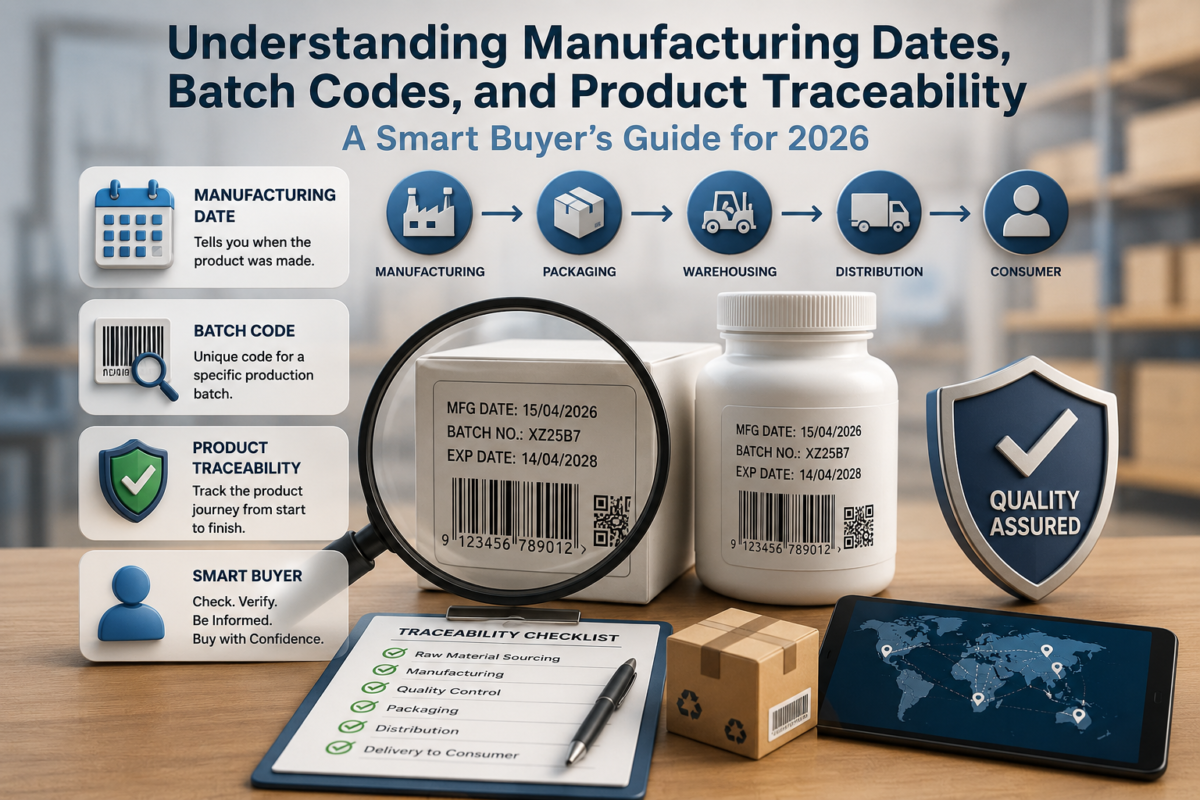
Understanding manufacturing dates batch codes and product traceability can help consumers make smarter purchasing decisions and better evaluate product transparency.
Why Product Transparency Matters More Than Ever
Transparency has become a major factor in consumer decision-making. Buyers want clear information about how products are produced, packaged, and distributed.
Transparency helps reduce confusion and encourages informed purchasing decisions.
When companies openly share manufacturing information, consumers can better understand quality control practices and accountability standards.
Product transparency also helps build long-term trust between brands and customers. Businesses that communicate clearly about their manufacturing processes often create stronger customer relationships and improve their overall reputation.
What Is a Manufacturing Date?
A manufacturing date identifies when a product was produced or packaged.
It provides a reference point for inventory management and quality monitoring.
Manufacturing dates may appear in several formats, including MM/DD/YYYY, DD/MM/YYYY, or coded production systems.
Understanding these dates helps consumers interpret product information more effectively.
Why Manufacturing Dates Matter
Manufacturing dates help support inventory rotation, quality assurance programs, and consumer awareness.
They provide insight into product history and help companies maintain organized production records.
Manufacturing dates also help consumers understand how recently products entered the market and demonstrate that a company follows structured inventory management practices.
Understanding Batch Codes
A batch code, also known as a lot number, is a unique identifier assigned to a specific production run.
Products manufactured together typically share the same batch code.
Batch codes help manufacturers organize production records and monitor consistency across production cycles.
Benefits of Batch Codes
Batch codes support:
- Quality control
- Production tracking
- Operational efficiency
- Customer service investigations
- Documentation management
Manufacturers use batch codes to improve traceability and maintain detailed records of production activities. These identifiers play a critical role in modern quality assurance systems.
What Is Product Traceability?
Product traceability refers to the ability to track a product through sourcing, manufacturing, packaging, warehousing, and distribution processes.
Traceability systems allow companies to document product movement and maintain visibility throughout the supply chain.
Many organizations follow global traceability standards to improve supply chain visibility and documentation practices.
Manufacturing dates batch codes and product traceability work together to improve accountability throughout the product lifecycle.
Why Traceability Is Important
Traceability improves accountability, transparency, and process management.
It also helps businesses maintain detailed records and improve operational performance.
Many organizations use traceability systems to improve documentation, support internal audits, and maintain higher levels of quality control.
How Manufacturing Dates Help Consumers
Consumers can use manufacturing information to better understand product history and evaluate available information before making purchasing decisions.
Clear manufacturing details often indicate stronger attention to documentation and quality management.
Consumers who understand manufacturing dates are better equipped to compare products and identify brands that prioritize transparency.
Why Batch Codes Play an Important Role in Quality Control
Quality control systems rely on accurate documentation.
Batch codes help connect products to specific production records and allow manufacturers to review information efficiently.
They also help identify production trends and support continuous improvement efforts.
Accurate batch tracking improves operational consistency and helps organizations maintain reliable production standards.
How Product Traceability Builds Consumer Confidence
Consumers value transparency.
Companies that provide detailed information about manufacturing and traceability often create stronger trust relationships with their customers.
Traceability demonstrates a commitment to accountability and operational transparency.
When consumers see clear documentation and traceability systems, they are often more confident in the purchasing process.
Common Red Flags Consumers Should Watch For
Responsible buyers should pay attention to:
- Missing manufacturing dates
- Unclear batch numbers
- Inconsistent labeling
- Limited product information
- Lack of transparency
These issues do not automatically indicate a problem, but they may justify additional research before making a purchasing decision.
Consumers should always review available information carefully and seek clarification when important details are missing.
Best Practices for Responsible Buyers
Review product information carefully.
Review product information carefully and verify details through official sources whenever possible. Consumers can also review consumer product safety information from trusted regulatory resources before making purchasing decisions.
Keep records of purchases and prioritize brands that communicate clearly and transparently.
Consumers can also compare product information across multiple sources to ensure consistency and accuracy.
The Future of Product Traceability
Technology continues to improve product tracking systems.
Digital tools, automation, and improved documentation processes are making traceability more accessible and efficient across industries.
Consumers increasingly expect transparency, and businesses that invest in traceability are better positioned to build long-term trust.
As technology advances, traceability systems are expected to become even more sophisticated and user-friendly.
Frequently Asked Questions About Manufacturing Dates, Batch Codes, and Product Traceability
What is a manufacturing date?
A manufacturing date identifies when a product was produced or packaged.
What is a batch code?
A batch code is a unique identifier assigned to a production run.
Why are batch codes important?
They support quality control, documentation, and production tracking.
What is product traceability?
It is the ability to track a product through various stages of the supply chain.
Why should consumers care?
Because transparency helps buyers make informed purchasing decisions.
Final Thoughts
Companies that prioritize manufacturing dates batch codes and product traceability often demonstrate a stronger commitment to transparency and quality control.
Understanding manufacturing dates, batch codes, and product traceability helps consumers become more informed buyers.
These systems support transparency, accountability, and quality assurance throughout the product lifecycle.
As consumer expectations continue to evolve, companies that prioritize documentation and communication will be better positioned to earn long-term trust.
For responsible consumers, taking the time to understand manufacturing information can provide valuable insights and contribute to smarter purchasing decisions in today’s increasingly complex marketplace.
